In project-driven industries, profitability depends on one critical factor: cost control.
Whether managing construction projects, engineering contracts, fit-out works, maintenance operations, or large-scale developments, businesses across the UAE face increasing pressure to control budgets, reduce waste, and deliver projects on time without compromising margins.
However, managing project costs manually through spreadsheets, disconnected software, and delayed reporting often creates financial blind spots. By the time overspending is noticed, the budget may already be exceeded.
This is why many UAE companies are moving toward ERP-based project cost control.
ERP software provides real-time visibility into project expenses, resource usage, procurement costs, subcontractor billing, and financial performance—all within one connected system. Instead of reacting to cost overruns after they happen, businesses can monitor spending continuously and make informed decisions early.
Why Project Cost Control Matters More Than Ever
Project costs are rarely static. Material prices change, labor expenses increase, procurement delays affect timelines, and client scope revisions can impact budgets unexpectedly.
Without proper monitoring, these changes create:
- Budget overruns
- Delayed project completion
- Reduced profit margins
- Cash flow pressure
- Inaccurate forecasting
- Billing disputes
- Poor financial visibility
For UAE companies handling multiple projects at the same time, these challenges become even harder to manage manually.
A strong cost control system helps businesses answer important operational questions instantly:
- What is the actual project cost today?
- How much has been committed through purchase orders?
- Are we overspending against budget?
- Which project is most profitable?
- What costs are still pending invoicing?
- How much revenue has been recognized versus spent?
ERP software makes these answers available in real time.
How ERP Software Helps Control Project Costs
ERP systems bring finance, operations, procurement, inventory, and project management into one integrated platform. This creates a complete financial view of every project from planning to completion.
Budget Planning and Cost Estimation
Every project starts with a budget. ERP software allows businesses to define cost estimates for:
- Materials
- Labor
- Equipment
- Subcontractors
- Site expenses
- Administrative overhead
- Logistics and transportation
These budgets become the financial baseline for the project.
As expenses are recorded, ERP automatically compares actual spending against planned cost values.
This helps project managers identify cost variance early and take corrective action before the project budget is affected.
Real-Time Expense Tracking
One of the biggest advantages of ERP is live project expense monitoring.
Every transaction entered into the system—purchase invoice, stock issue, labor timesheet, vendor payment, equipment allocation, or subcontractor bill—is linked directly to the project.
This provides instant visibility into:
- Actual cost incurred
- Committed cost
- Pending expenses
- Budget balance
- Cost-to-complete value
Instead of waiting for month-end reports, managers can review project spending daily.
Procurement and Purchase Cost Control
Procurement has a major impact on project budgets.
ERP software improves procurement management by controlling:
- Purchase requests
- Supplier quotations
- Purchase orders
- Goods receipts
- Vendor invoices
- Payment approvals
With approval workflows and real-time purchase tracking, businesses can avoid:
- Duplicate purchasing
- Unauthorized buying
- Supplier overbilling
- Pricing inconsistencies
- Material shortages
Procurement teams also gain better control over supplier performance and purchasing history.
Resource and Labor Cost Management
Labor is often one of the largest project expenses.
ERP helps track:
- Employee allocation by project
- Daily attendance
- Overtime
- Payroll cost distribution
- Timesheet approvals
- Productivity hours
This ensures accurate labor costing against each project.
Management can quickly identify whether labor costs are within budget or affecting profitability.
Inventory Cost Visibility
For project-based businesses handling materials across stores, warehouses, and sites, inventory control directly affects project cost.
ERP allows teams to track:
- Material issued to each project
- Consumption quantity
- Return materials
- Stock transfers
- Inventory valuation
- Warehouse movement history
This reduces waste, prevents stock loss, and improves project-level material accountability.
Profitability Analysis by Project
Controlling cost is important—but measuring profitability is equally critical.
ERP software gives businesses the ability to monitor project profitability through:
- Revenue versus cost comparison
- Gross margin reporting
- Cost center performance
- WIP reporting
- Contract billing status
- Forecast margin analysis
Management can compare multiple projects and identify which jobs generate the strongest returns.
This supports better future bidding, budgeting, and strategic planning.
VAT Compliance for Project Transactions in the UAE
VAT compliance is an essential part of project accounting in the UAE.
Project-based businesses deal with multiple taxable transactions every day, including:
- Material purchases
- Supplier invoices
- Customer billing
- Advance payments
- Retention payments
- Credit notes
- Subcontractor charges
Managing VAT manually across projects increases the risk of calculation errors and compliance issues.
ERP software simplifies VAT management by automating:
- VAT calculation on sales and purchases
- VAT input and output tracking
- Tax invoice generation
- VAT return reporting
- VAT audit trail
- Transaction-level tax visibility
This helps ensure compliance with UAE Federal Tax Authority requirements while reducing manual accounting effort.
Finance teams can also generate VAT-ready reports instantly for filing and reconciliation.
E-Invoicing and Faster Project Billing
As digital invoicing adoption continues growing across the UAE and GCC region, businesses are increasingly preparing for structured e-invoicing processes.
ERP software supports this transition by enabling:
- Digital invoice creation
- Customer invoice automation
- Credit note generation
- Approval workflows
- Electronic invoice storage
- Invoice tracking and status monitoring
For project businesses, this means faster and more accurate billing based on:
- Project milestones
- Work completed
- progress billing
- contract terms
- recurring billing schedules
E-Invoicing also improves transparency, reduces invoice errors, shortens billing cycles, and supports stronger financial control across projects.
Better Decision-Making Through Real-Time Reporting
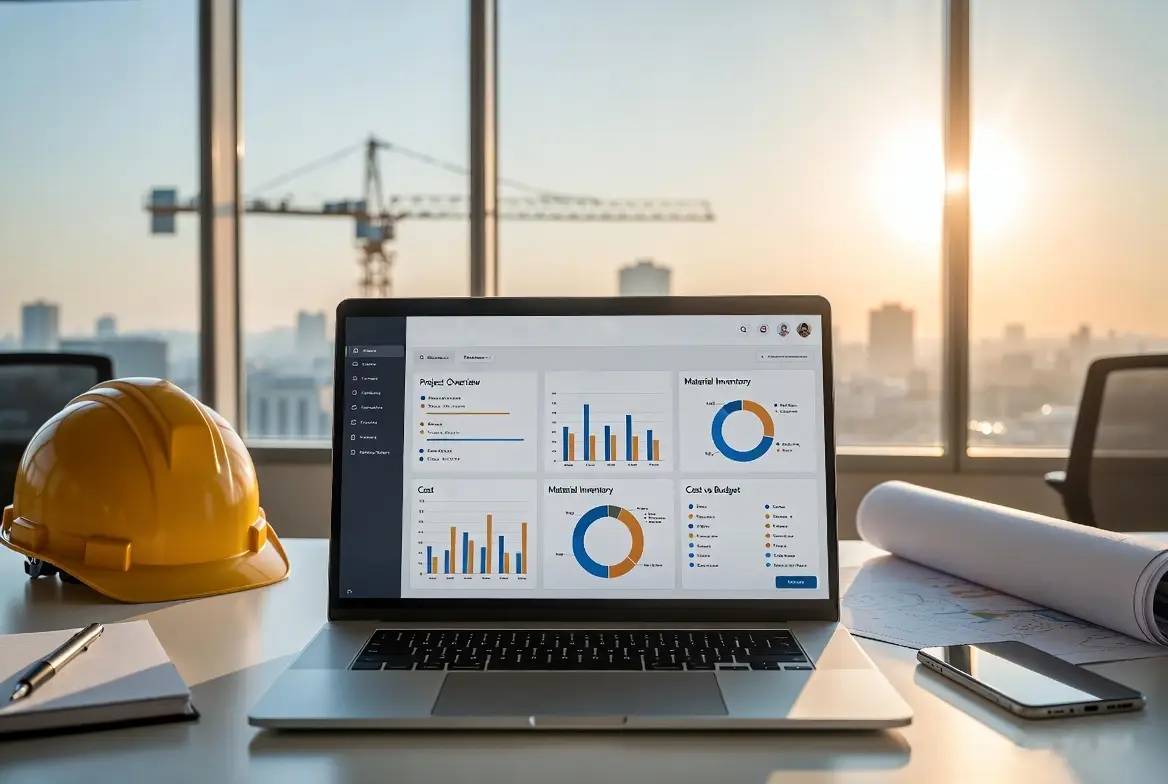
ERP dashboards provide project managers and finance teams with instant access to performance data.
Reports can include:
- Project budget vs actual
- Cost variance analysis
- procurement spend summary
- resource utilization
- project cash flow
- invoice aging
- profitability by project
- VAT reports
- billing progress reports
Instead of relying on disconnected reports from different departments, leadership teams work from one centralized source of data.
This improves operational decision-making and financial planning.
The Future of Project Cost Control in the UAE
UAE businesses are becoming more focused on efficiency, compliance, and profitability.
As projects become larger and more complex, cost control can no longer depend on spreadsheets or manual tracking.
ERP software provides the visibility businesses need to manage budgets proactively, monitor performance in real time, stay VAT compliant, streamline e-invoicing, and protect project profitability.
Companies that adopt ERP gain stronger financial control, better reporting accuracy, and faster decision-making across every project lifecycle stage.
Conclusion
Successful project execution is not only about completing work on time—it is about completing it profitably.
Without cost control, even well-executed projects can lose money.
ERP software helps UAE businesses track every expense, control procurement, manage resources, monitor budgets, automate VAT processes, support e-invoicing, and improve overall project profitability from start to finish.
For companies managing multiple projects in competitive industries, ERP is no longer just a software investment—it is a business control strategy.