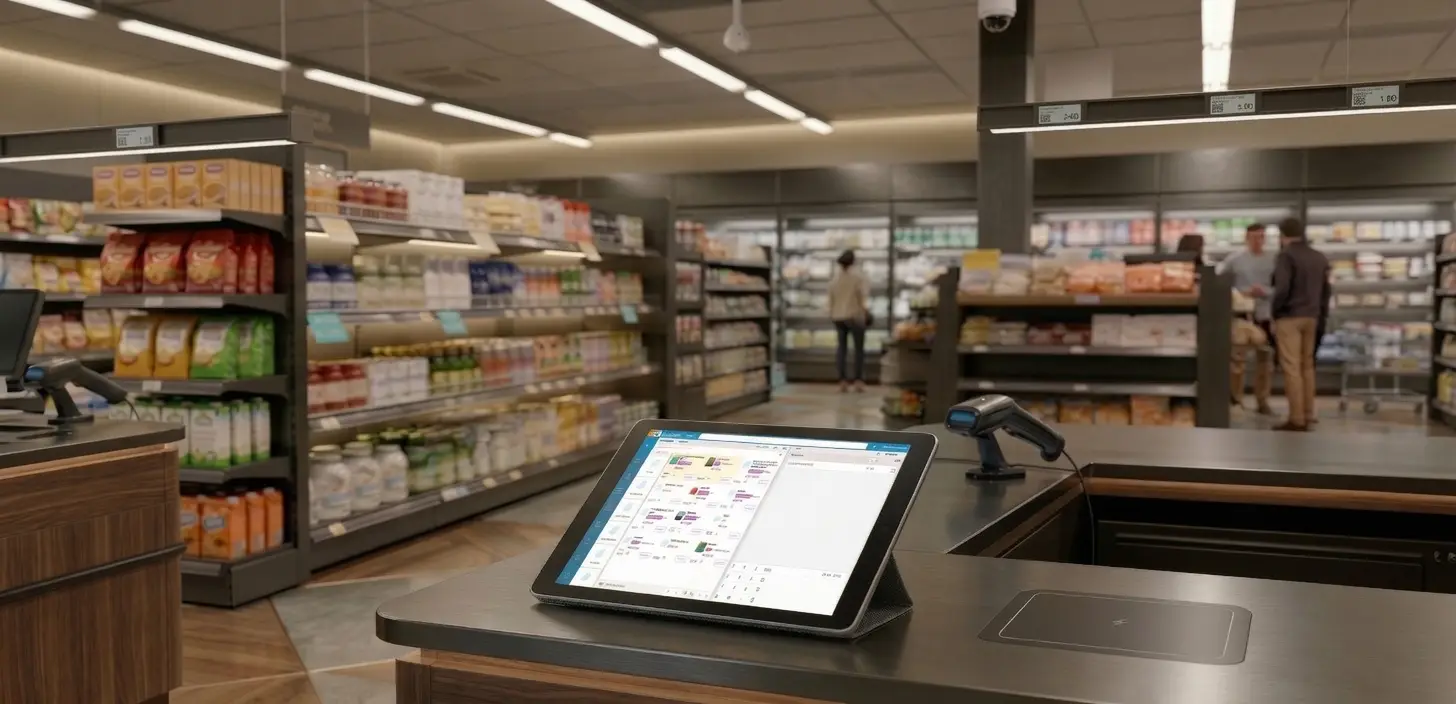
For years, FMCG businesses in the UAE focused heavily on expanding product lines, increasing distribution reach, and acquiring more retail customers.
But in 2026, the biggest challenge facing FMCG distributors is no longer market demand.
It is operational speed.
Across Dubai, Abu Dhabi, and the wider GCC region, FMCG distributors are dealing with shrinking margins, inventory pressure, expiry risks, delayed supply chain decisions, and growing retailer expectations.
Products are moving faster than ever.
But many businesses are still managing operations through disconnected software, spreadsheets, manual inventory updates, and delayed reporting systems.
Industry analysts say this operational gap is becoming one of the biggest reasons FMCG companies struggle to scale profitably.
The companies growing successfully today are not necessarily the ones with the biggest warehouses.
They are the ones with the fastest operational visibility.
This is why ERP-driven distribution management is rapidly becoming the backbone of modern FMCG businesses in the UAE.
Solutions like RealSoft ERP are helping distributors centralize inventory, expiry tracking, finance, sales, logistics, and supply chain management into one intelligent ecosystem.
The FMCG Industry Runs on Speed, Accuracy, and Timing
Unlike many industries, FMCG distribution operates on extremely thin margins and high-volume movement.
Even small operational delays can create major financial consequences.
A typical FMCG business today must simultaneously manage:
- Fast-moving inventory
- Expiry-sensitive products
- Batch tracking
- Multi-location warehouses
- Retail distribution
- Sales teams
- Procurement cycles
- Delivery schedules
- Promotional pricing
- Supplier coordination
- VAT-compliant accounting
- E-commerce integration
And the complexity increases further when businesses deal with:
- Frozen products
- Beverages
- Cosmetics
- Bakery products
- Chocolates
- OTC products
- Packaged foods
The challenge is no longer simply stocking products.
The challenge is controlling movement, visibility, and decision-making in real time.
Expiry Management Has Become a Major Profitability Issue
One of the biggest hidden losses in FMCG businesses comes from expiry mismanagement.
Products sitting too long in warehouses create:
- Expired inventory losses
- Retail return issues
- Brand reputation risks
- Cash flow pressure
- Overstocking problems
Many businesses still struggle to monitor expiry dates efficiently across multiple warehouses and distribution points.
Without real-time visibility, management teams often discover problems too late.
Modern ERP systems now provide intelligent expiry control mechanisms that help businesses:
- Track batch codes
- Monitor expiry timelines
- Prioritize stock rotation
- Reduce wastage
- Improve warehouse movement
This has become essential for FMCG businesses operating in competitive UAE markets.
Distribution Businesses Are Facing a Visibility Crisis
One of the biggest operational problems in FMCG distribution today is fragmented information.
Sales teams operate separately from warehouses.
Warehouse teams work independently from finance.
Procurement teams lack real-time inventory visibility.
Management receives reports after decisions should already have been made.
This creates delays across the entire business cycle.
Businesses often struggle to answer basic operational questions instantly:
- Which products are moving fastest?
- Which items are near expiry?
- Which customers have outstanding balances?
- Which warehouse requires replenishment?
- Which product categories generate better margins?
- Which suppliers are causing delays?
Without centralized data, businesses rely on assumptions instead of accurate insights.
Why Traditional Software Cannot Handle Modern FMCG Complexity
Many distributors initially rely on accounting systems or standalone inventory tools.
But FMCG operations require far more than bookkeeping.
A modern FMCG distribution business needs systems capable of managing:
- Batch tracking
- Expiry control
- HS code management
- Bill of entry visibility
- Route planning
- Demand forecasting
- Retail pricing structures
- E-commerce synchronization
- Warehouse transfers
- Real-time sales analysis
Traditional systems simply cannot support this level of operational complexity.
This is why businesses are moving toward industry-specific ERP platforms.
Inventory Accuracy Is Becoming a Competitive Weapon
In FMCG distribution, inventory mistakes directly affect profitability.
Stockouts lead to missed sales opportunities.
Overstocking creates expiry risk.
Delayed replenishment affects retailer relationships.
Manual inventory handling increases operational errors.
ERP systems now allow businesses to monitor inventory with real-time accuracy across multiple locations.
Modern ERP platforms help businesses:
- Monitor stock movement instantly
- Automate reorder planning
- Analyze fast-moving products
- Track dead stock
- Improve warehouse efficiency
- Reduce manual dependency
This level of visibility allows businesses to react faster to market demand.
FMCG Businesses Are Moving Toward Predictive Operations
to predictive decision-making.
Modern ERP systems now use:
- Historical sales analysis
- Demand forecasting
- Inventory movement trends
- Supplier performance tracking
- Customer buying behavior
- Profitability analytics
to help businesses anticipate operational needs before problems occur.
Instead of reacting to stock shortages or expiry losses, companies can now prevent them proactively.
This improves both operational stability and profitability.
E-Commerce Integration Is No Longer Optional
The rise of online ordering and digital retail has transformed FMCG distribution.
Businesses now need systems that integrate seamlessly with:
- Online ordering platforms
- Retail management systems
- Mobile sales teams
- Warehouse operations
- Delivery management
ERP integration helps businesses maintain centralized operational control even when distribution channels expand rapidly.
This is becoming increasingly important for FMCG brands targeting omnichannel growth across the UAE and GCC.
Financial Control Is Becoming More Complex
As distribution operations expand, financial management becomes increasingly difficult.
FMCG businesses must monitor:
- Retail credit cycles
- Supplier payments
- VAT compliance
- Cash flow
- Distribution costs
- Warehouse expenses
- Product margins
Disconnected systems often create financial blind spots.
Modern ERP platforms integrate finance directly with inventory, sales, procurement, and logistics operations.
This gives management real-time financial visibility instead of delayed accounting reports.
Why FMCG Companies Are Investing in ERP Automation
Industry experts believe ERP adoption in the FMCG sector is accelerating because businesses now recognize that operational speed directly impacts profitability.
Search demand is rapidly increasing for:
- FMCG ERP UAE
- Distribution Management Software
- FMCG Inventory ERP
- FMCG Supply Chain ERP
- Expiry Management Software
- Batch Tracking ERP
- Warehouse ERP UAE
- FMCG Accounting ERP
Businesses are actively looking for solutions that help them scale without losing operational control.
Why Businesses Choose RealSoft FMCG ERP
With over 24 years of ERP expertise and more than 5000 successful implementations across industries, RealSoft ERP continues supporting FMCG businesses across the UAE and GCC.
The platform is designed specifically to handle high-volume distribution environments.
Key capabilities include:
- Batch Code Management
- Expiry Control
- HS Code Management
- Bill of Entry Tracking
- Inventory Automation
- CRM Integration
- Supply Chain Visibility
- E-commerce Integration
- Demand Forecasting
- Real-Time Financial Reporting
The solution is scalable and customizable based on operational requirements.
Whether managing a regional distribution network or multiple warehouse operations, RealSoft ERP helps businesses centralize control and improve efficiency.
The FMCG Industry Is Entering a New Operational Era
The FMCG market in the UAE is becoming increasingly fast, data-driven, and competitive.
Businesses that continue relying on disconnected systems may struggle with:
- Operational inefficiencies
- Delayed reporting
- Inventory wastage
- Expiry losses
- Slower decision-making
- Reduced profitability
Meanwhile, businesses adopting intelligent ERP ecosystems are gaining stronger operational control, better inventory accuracy, faster supply chain decisions, and improved customer responsiveness.
The future of FMCG distribution will belong to businesses that can operate with speed, visibility, and precision.
Operational Efficiency Is the New Growth Strategy
For FMCG distributors, growth is no longer just about increasing sales volume.
Real growth comes from controlling operations intelligently while scaling efficiently.
RealSoft FMCG ERP helps FMCG businesses gain complete visibility across inventory, distribution, finance, procurement, warehousing, and customer operations from one centralized platform.
From expiry tracking and batch management to real-time reporting and supply chain control, RealSoft ERP gives distributors the operational confidence needed to compete in today’s demanding FMCG market.
Book a free demo today and discover how modern FMCG businesses are transforming distribution management with intelligent ERP automation.